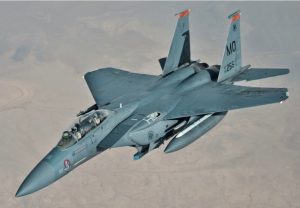
In a dramatic escalation that has shaken global markets and raised the specter of direct superpower confrontation in the Middle East, a United States F-15E Strike Eagle fighter jet was shot down over Iranian territory on Saturday, marking one of the rarest combat losses for the U.S. Air Force in decades.
As rescue teams scramble to locate the missing weapons systems officer while the pilot has already been safely extracted, President Donald Trump has issued a blunt 48-hour ultimatum to Tehran: reopen the Strait of Hormuz or face “hell.” The crisis, unfolding against a backdrop of retaliatory strikes and soaring oil prices, has thrust the world into a high-stakes standoff with profound implications for energy security, regional stability, and the future of U.S.-Iran relations.The downing of the advanced fighter jet occurred during what U.S. officials described as routine but increasingly tense operations in the Persian Gulf region.
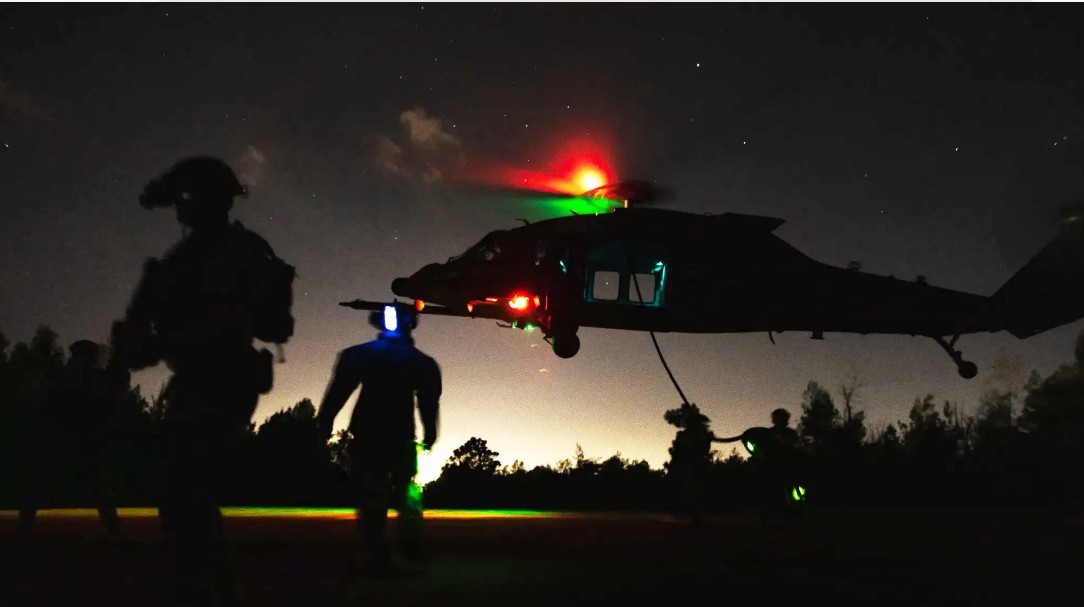
One crew member the pilot was successfully rescued in a daring operation that officials say demonstrated the precision and speed of American special forces. Search-and-rescue efforts for the second crew member, the weapons systems officer, continued into a second day amid heightened risks of capture by Iranian forces. Iranian authorities have publicly denied holding the airman, yet state television has aired segments offering rewards for information leading to his capture, adding a psychological dimension to the already volatile situation.
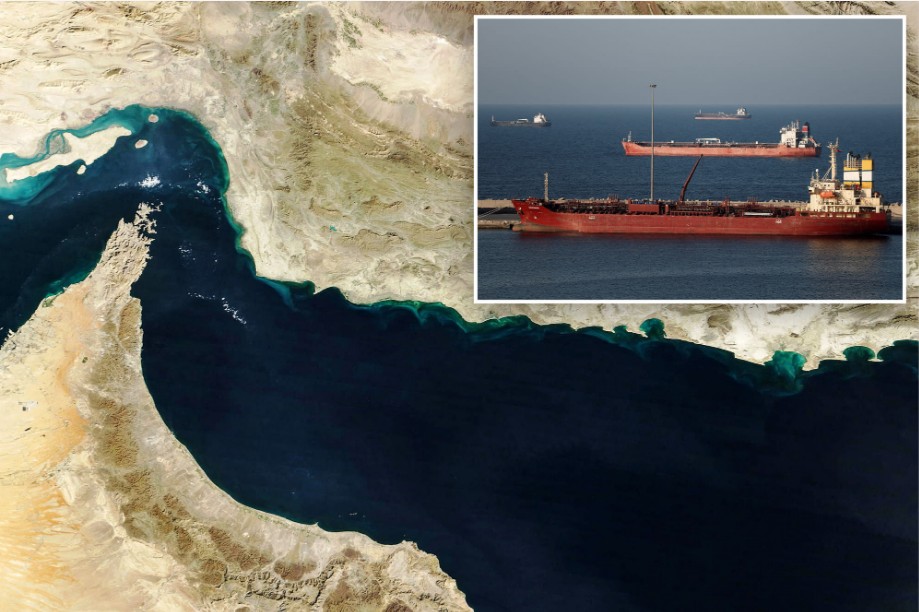
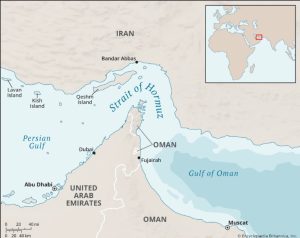
Military analysts note that such incidents, while infrequent for the U.S., echo historical flashpoints like the 1980s tanker war and underscore the fragility of deterrence in one of the world’s most contested waterways.President Trump, addressing the nation from the White House, wasted no time in framing the event as a direct challenge to American power. In a fiery statement accompanied by video footage he claims shows the “termination” of key Iranian military leaders in prior U.S. strikes, the president demanded the immediate reopening of the Strait of Hormuz a narrow chokepoint through which approximately 20 percent of global oil and liquefied natural gas passes daily.
“They have 48 hours,” Trump declared, “or they will feel consequences like they have never felt before.” The ultimatum comes after reports of Iranian threats to close the strait in retaliation for ongoing U.S. and Israeli military actions, including strikes on a major Iranian petrochemical complex. Shipping data already shows disruptions, with several tankers diverting routes and insurance premiums for Gulf transits spiking overnight.
The broader military picture reveals a rapidly intensifying campaign. U.S. forces have conducted additional precision strikes deep inside Iran, targeting command-and-control nodes and air-defense systems. Israeli jets, operating in coordination with American intelligence, are reported to have hit critical infrastructure, further degrading Iran’s capacity to project power in the region. Trump’s administration has touted these operations as evidence of overwhelming American dominance, releasing declassified imagery that purportedly shows the destruction of Iranian missile batteries and radar installations. Yet the loss of the F-15E has invited sharp criticism from some quarters, with detractors pointing to earlier presidential remarks that allegedly downplayed Iranian defensive capabilities.
Defense experts caution that while U.S. technological superiority remains unmatched, the incident highlights the persistent risks of operating in contested airspace against a determined adversary equipped with increasingly sophisticated Russian- and Chinese-supplied systems.Beyond the battlefield, the crisis is rippling through diplomatic and domestic channels. In a move signaling zero tolerance for Iranian influence networks, the Trump administration has revoked U.S. visas and green cards for relatives of the late Iranian General Qassem Soleimani, the architect of Tehran’s regional proxy strategy until his 2020 assassination. Immigration and Customs Enforcement (ICE) teams have initiated targeted arrests in several U.S. cities, focusing on individuals with documented ties to Iranian-backed organizations.
These actions, while framed as national-security necessities, have sparked debate among civil-liberties advocates who worry about overreach. At the same time, Pentagon officials are preparing supplemental defense-budget requests to Congress, anticipating prolonged engagement that could strain resources already stretched by commitments elsewhere.The economic consequences are immediate and far-reaching. Global oil benchmarks surged more than 8 percent in early trading Sunday as traders priced in the risk of prolonged strait closures. Energy analysts project that sustained disruption could push crude prices toward $120 per barrel, a level not seen since the 2008 financial crisis.
Vulnerable economies in Europe, Asia, and Africa already grappling with inflation and supply-chain fragility are expected to bear the brunt, with higher fuel costs translating into elevated food prices and transportation expenses. Shipping giants have begun rerouting vessels around the Cape of Good Hope, adding thousands of miles and weeks to transit times. Stock markets in energy-dependent nations reacted with volatility, while gold and other safe-haven assets climbed as investors sought shelter from geopolitical uncertainty.Geopolitically, the confrontation tests the resilience of long-standing alliances and rivalries. Saudi Arabia and the Gulf Cooperation Council states have quietly signaled support for U.S. efforts to secure maritime lanes, viewing Iranian aggression as an existential threat to their own oil-dependent economies.
China, Iran’s largest trading partner, has urged restraint through diplomatic backchannels while quietly increasing its own naval presence in the Indian Ocean. Russia, entangled in its own conflict in Ukraine, has offered rhetorical backing to Tehran but limited material aid. Within the United States, the crisis has prompted speculation about potential cabinet-level adjustments, with sources indicating that war-time decision-making may elevate the roles of national-security hardliners.
Public opinion remains divided: polls show strong support for protecting U.S. service members and global energy flows, yet a growing segment of voters expresses fatigue over endless Middle East entanglements.The human dimension of the story remains front and center.
The missing airman’s family has been notified and is receiving full military support, while the rescued pilot is reported in stable condition at a U.S. medical facility in the region. Iranian media, meanwhile, has amplified narratives of resistance, broadcasting images of downed wreckage and framing the incident as a victory against “imperialist aggression.” Such messaging serves a dual purpose: rallying domestic support within Iran’s clerical establishment and projecting defiance to a global audience.As the 48-hour deadline looms, the world watches with bated breath. Diplomatic efforts mediated through third-party channels including Oman and Qatar continue behind the scenes, though progress remains elusive.
Military planners on all sides are preparing for multiple contingencies, from limited naval skirmishes to a full-scale closure of the strait that could choke off 21 million barrels of oil per day. Historians are already drawing parallels to past Gulf crises: the 1991 Operation Desert Storm, the 2003 Iraq invasion, and the 2019-2020 tanker attacks.
Each precedent reminds us that miscalculation in the region carries catastrophic potential.In the final analysis, the downing of the F-15E and Trump’s subsequent ultimatum represent more than a bilateral clash; they encapsulate a broader contest over the rules-based international order, energy dominance, and the limits of military power in an era of great-power competition.
The immediate priority remains the safe return of the missing airman and the prevention of further escalation that could engulf neighboring states. Yet the deeper stakes secure global energy markets, deterrence against state-sponsored proxies, and the credibility of American commitments will shape policy for years to come.Whether the Strait of Hormuz reopens peacefully or the region descends further into conflict will be decided in the coming hours.
For now, one truth stands clear: the Persian Gulf, long a powder keg of competing interests, has once again ignited, demanding swift, measured leadership from all parties involved. The eyes of the world and the wallets of every consumer at the gas pump are fixed on Tehran’s next move.
SOURCE : Grok News Desk