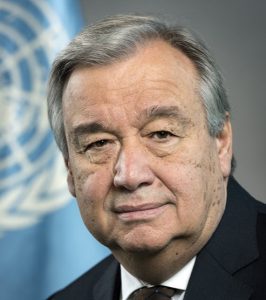
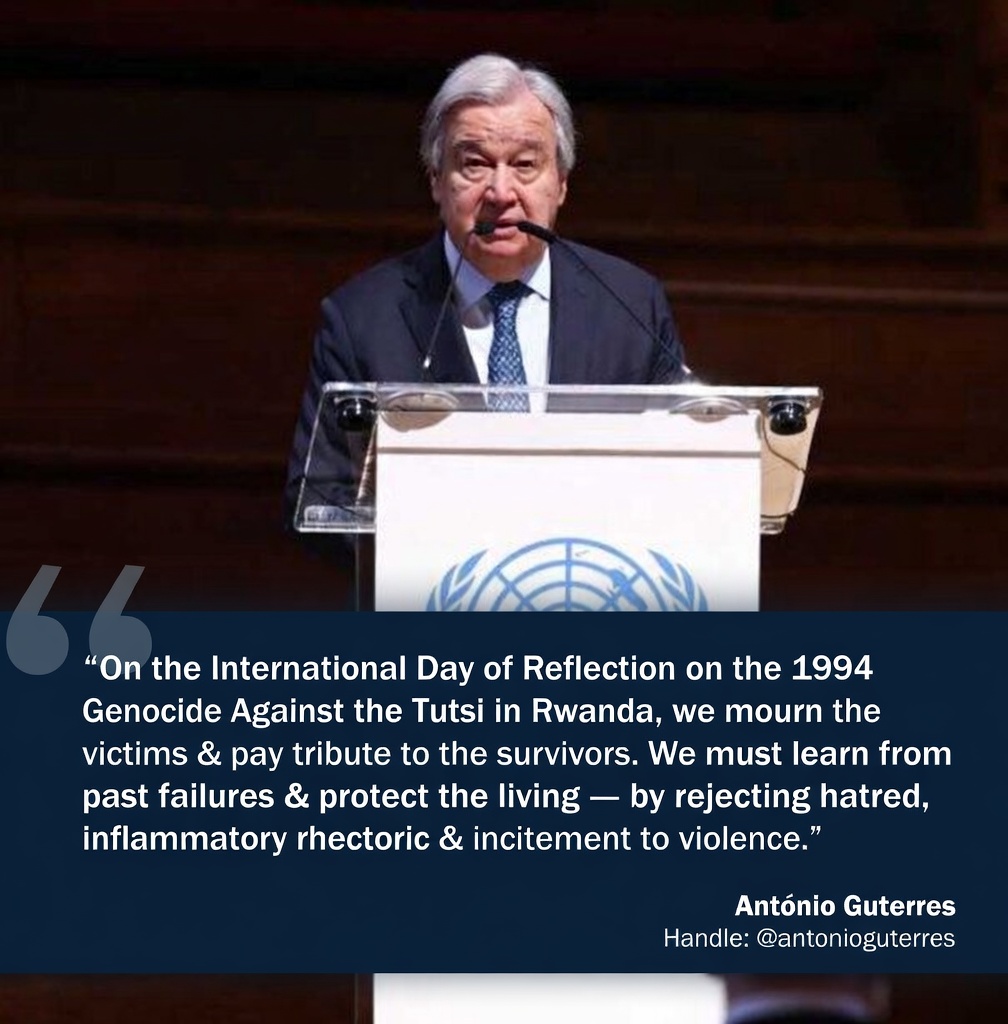
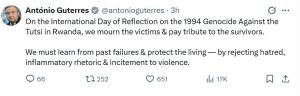
On April 7 each year, the world pauses to observe the International Day of Reflection on the 1994 Genocide Against the Tutsi in Rwanda. In 2026, UN Secretary-General António Guterres marked the occasion with a stark, direct message on X (formerly Twitter): “On the International Day of Reflection on the 1994 Genocide Against the Tutsi in Rwanda, we mourn the victims & pay tribute to the survivors.
We must learn from past failures & protect the living by rejecting hatred, inflammatory rhetoric & incitement to violence.”
antonioguterres post, shared amid global remembrance events, cuts through diplomatic language to remind humanity of a brutal truth: genocide is never inevitable, but it is preventable if the world chooses action over indifference. More than 1,000,000 Tutsi were slaughtered in just 100 days between April and July 1994. Entire families were wiped out with machetes, clubs, and guns. Churches that once offered sanctuary became killing fields. The genocide was not a spontaneous outbreak of tribal violence; it was meticulously planned, fueled by decades of colonial-era divisions, state-sponsored hate radio, and lists of targets distributed in advance. Today, as social media amplifies division faster than ever, Guterres’ words carry renewed weight. This article examines the genocide’s roots, the international community’s catastrophic failure, Rwanda’s remarkable journey of healing, and the timeless lessons that demand we do better before the next warning sign turns into another tragedy. The Historical Roots: How Colonialism and Hate Paved the WayRwanda’s pre-colonial history featured fluid social categories between Hutu (roughly 85% of the population) and Tutsi (about 14%). Identity was tied more to occupation herding versus farming than rigid ethnicity. Belgian colonial rule in the early 20th century changed that forever.
Administrators issued identity cards that hardened ethnic labels, favoring Tutsi for administrative roles while sowing resentment among Hutu. When independence came in 1962, the pendulum swung violently. Hutu-led governments institutionalized discrimination, periodic massacres of Tutsi, and exile of hundreds of thousands.
By the early 1990s, a Tutsi-led rebel group, the Rwandan Patriotic Front (RPF), invaded from Uganda, sparking civil war. Peace talks in Arusha produced a fragile power-sharing agreement in 1993. But extremists within the Hutu Power movement rejected compromise. They built militias (the Interahamwe), imported weapons, and broadcast venomous propaganda via Radio Télévision Libre des Mille Collines (RTLM), which dehumanized Tutsi as “cockroaches” and urged Hutu to “cut down the tall trees.”
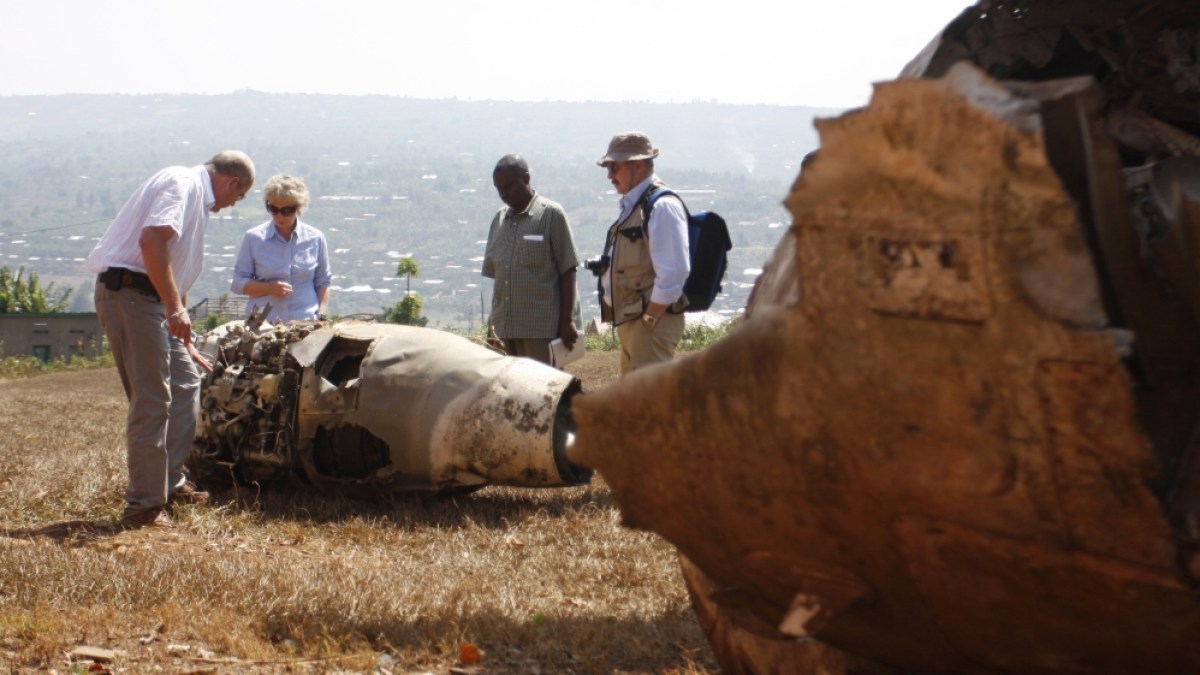
The spark came on April 6, 1994, when President Juvénal Habyarimana’s plane was shot down near Kigali. Within hours, roadblocks went up, moderate Hutu leaders were assassinated, and the slaughter began. Ordinary citizens neighbors, teachers, priests were coerced or incentivized to kill. In some villages, participation rates exceeded 70%. By mid-July, when the RPF finally seized control, the death toll stood at approximately Above 1,000,000.
The United Nations’ Shameful Failure
Warnings Ignored, Lives LostThe genocide did not happen in a vacuum of ignorance. The UN Assistance Mission for Rwanda (UNAMIR), led by Canadian General Roméo Dallaire, had been on the ground since October 1993. In January 1994 three months before the killings Dallaire sent a now-infamous “genocide fax” to UN headquarters in New York. It detailed informant warnings of planned extermination, hidden weapons caches, and training of death squads. The response? Headquarters ordered Dallaire to avoid confrontation and share the information only with the Rwandan government—the very authorities orchestrating the plot.
When the massacres erupted, UNAMIR’s 2,500 peacekeepers were hamstrung by a weak mandate and orders not to use force except in self-defense. Belgium withdrew its troops after 10 soldiers were killed. The U.S., scarred by the 1993 Somalia “Black Hawk Down” incident, lobbied against stronger intervention. France, Rwanda’s former patron, delayed action while maintaining ties with the genocidal regime. The UN Security Council spent weeks debating semantics deliberately avoiding the word “genocide” to evade legal obligations under the 1948 Genocide Convention.
By the time the UN finally authorized a reinforced mission in May, it was too late. An independent inquiry later concluded: “The United Nations failed the people of Rwanda during the genocide in 1994. It is a failure for which the United Nations as an organization and the Member States bear responsibility.”
Guterres has repeatedly acknowledged this institutional shame. In multiple annual addresses, he has described the genocide as “a stain on our collective consciousness” and a direct consequence of hate speech, division, and the world’s refusal to act.
Establishing the International Day of Reflection: Honoring Memory, Demanding AccountabilityIn 2018, the UN General Assembly formally designated April 7 as the International Day of Reflection on the 1994 Genocide Against the Tutsi in Rwanda. The resolution was more than symbolic: it committed the international community to education, remembrance, and prevention. Events are held annually at UN headquarters and field offices, featuring survivor testimonies, exhibitions, and policy discussions.
Rwanda itself transformed April 7 into Kwibuka “to remember.” For 100 days each year, the nation engages in mourning, education, and community service. President Paul Kagame has emphasized that remembrance is not about dwelling in victimhood but building resilience. Guterres’ 2026 message echoes earlier statements: mourning is essential, but tribute to survivors means translating grief into vigilance. He stresses learning from “past failures” and protecting the living by combating the same tools that enabled 1994—hatred, inflammatory rhetoric, and incitement.
Reconciliation, Justice, and Economic MiracleFrom the ashes, Rwanda has risen with extraordinary determination. The Gacaca community courts—traditional yet innovative—processed over 1.2 million cases, prioritizing truth-telling and reconciliation over pure punishment. More than 1,000,000 perpetrators confessed and received reduced sentences in exchange for genuine remorse.
Women, who bore the brunt of sexual violence (estimates suggest 250,000–500,000 survivors of rape), now hold 61% of parliamentary seats—the highest globally. Rwanda has outlawed ethnic identity cards, banned hate speech, and invested heavily in education and healthcare. Today, it boasts one of Africa’s fastest-growing economies, with poverty rates halved and life expectancy up by 20 years since 1994.
Yet challenges remain. Genocide denial is criminalized, sparking debates about free speech versus protection. The country continues to grapple with trauma across generations. Survivors like Esther Mujawayo-Keiner, who lost her entire family, have become global advocates, reminding the world that healing is possible—but never automatic.
Lessons for a Divided World: Why 1994 Still Matters in 2026Guterres’ call to “reject hatred, inflammatory rhetoric & incitement to violence” is not abstract. Social media algorithms reward outrage. Political leaders across continents use dehumanizing language. Conflicts in the Democratic Republic of Congo, Sudan, Myanmar, and elsewhere show that the ingredients of genocide othering, impunity, and international hesitation—persist.
The UN has since created the Office of the Special Adviser on the Prevention of Genocide and the Responsibility to Protect doctrine. Early-warning systems and fact-finding missions have improved. But political will remains the weakest link. As one survivor put it: “When you escape death, that’s when you appreciate life.”
Civil society, educators, and digital platforms must now play their part. Schools worldwide teach the Rwandan Genocide alongside the Holocaust and other atrocities. Tech companies are under pressure to moderate hate speech more aggressively. Individuals can support survivor organizations, amplify accurate history, and call out incitement in their own communities.
From Remembrance to ResolveThe 1994 Genocide Against the Tutsi stands as proof that indifference kills. Guterres’ message on the International Day of Reflection is both eulogy and warning: mourn the dead, honor the survivors, and act—because the next potential genocide may already be brewing in the language we tolerate and the warnings we ignore.
Rwanda’s story shows humanity’s capacity for renewal. But renewal requires constant vigilance. On this day and every day, the question is not whether we remember, but whether we have truly learned.
Never again must mean never again starting now.